The world contains diverse cultures defined by different traditions, histories, and unique elements that separate them from each other. These distinct cultural elements unified the people and set expectations for certain behaviors. In order to set expectations priorities are crucial. Some cultures prioritize individualism and other collectivism and these ideals influence their actions in drastic ways. The ideals and priorities of cultures often originate from the history of that culture. Certain events and people showcase the most important cultural values and become symbols of the ideals of the people. In order to illustrate these influences, symbols are used repeatedly and can help us better understand these unique cultures.
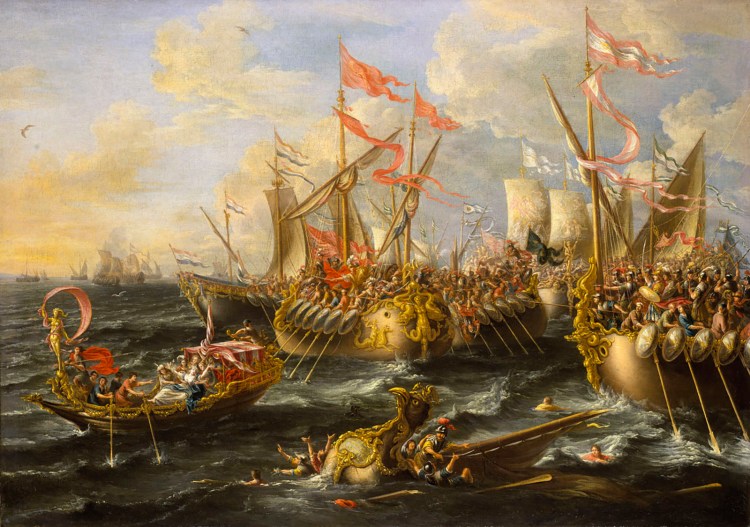
In the Aeneid, Aeneas is given a shield that is engraved with symbols of the Roman culture. The shield illustrates the founding events of Rome, including Romulus and Remus, and the rape of the Sabine women. Additionally, the shield shows the key battle of Actium emphasizing Caesar Augustus and the opposing side of Antony and Cleopatra. Symbols on the shield demonstrate themes of war, unity, and legacy which illustrate important aspects and priorities of Roman culture. The battles and violence shown on the shield show the importance of war and conquering to the Romans. The leaders engraved on the shield were symbols and examples of the moral and cultural values that were most important to their society. In addition, the images of battles and leaders also show the importance of unity and pride in Rome.
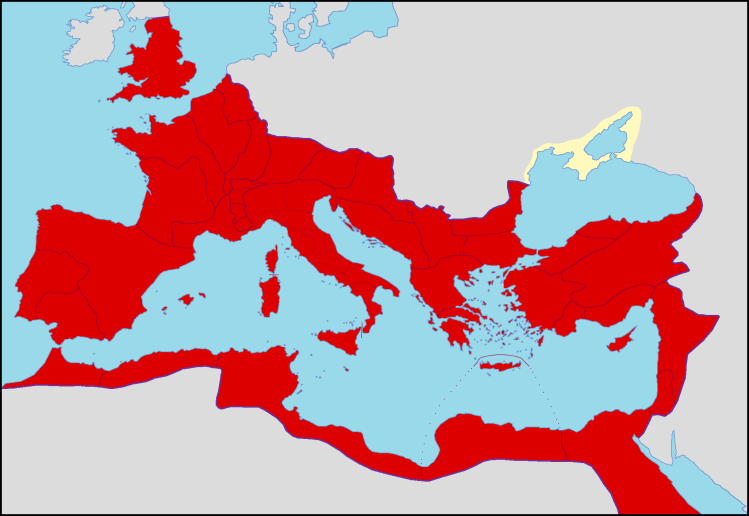
Battles, the resulting victories, and war were important to the Roman legacy. The shield portrays several wars and battles such as “the sudden war between the sons of Romulus and aged Tatius” and “in the center…the Battle of Actium”(Virgil, Book 8 lines 728, 771). The victories that resulted from these battles helped shape Rome. These battles led to the conquering of other people and protecting and expanding their every growing influence. War was an expectation and expanding their empire through war helped the empire flourish. After the battles, Rome would absorb the conquered people into their empire. Rome did not keep enemies but rather “Rome completed the conquest of peninsular Italy by forcing all its peoples to become allies, either by defeating them in war or compelling them to surrender in advance,”(Matthews 1). War helped their empire flourish and was essential to the success of the citizens of Rome. The people were expected to put the pride and success of their country above their own lives and families.
The pride of Rome helped unify the empire and helped fuel the empire’s success. Unity was essential and the empire expanded to envelope multiple cultures and peoples. As citizens prioritized Rome over everything else, the empire flourished. On the shield, the conquered people are also shown, and Virgil describes them, “each as different in their clothes and gear as in the tongues they spoke,” (Book 8, line 830). The diversity described on the shield shows how Rome included and adopted many peoples into their empire. Instead of a division among people, they promoted inclusion and gave the conquered people reasons to want to be part of the Roman empire.
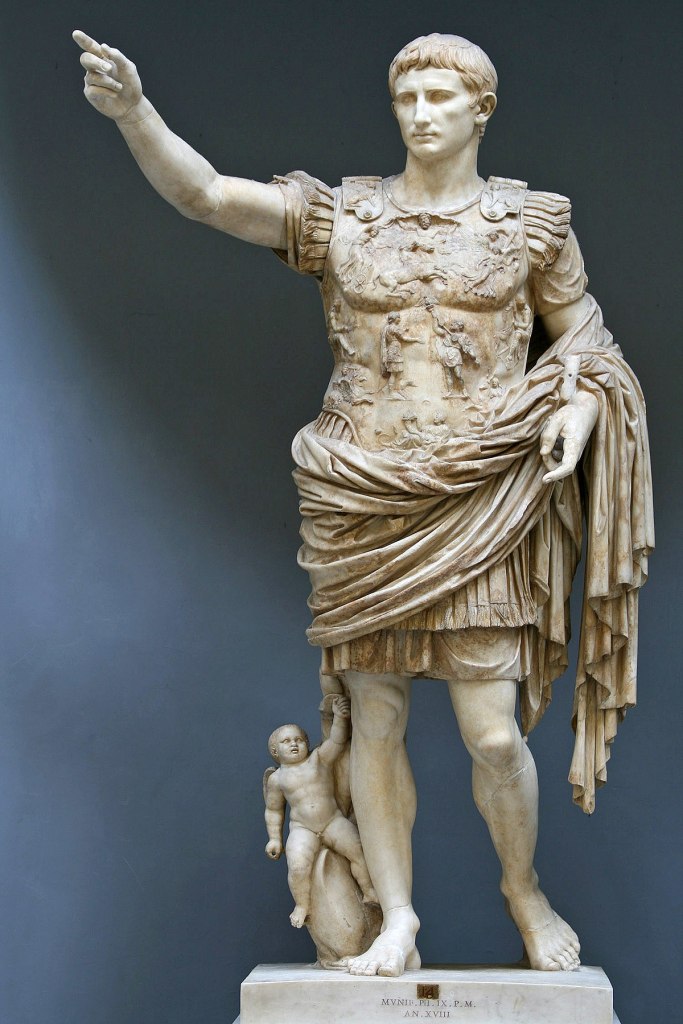
Leaders were vital in unifying Rome and served as examples of the values to be fostered by society. The leaders portrayed on the shield also demonstrate the ideal Roman values and morals. Some of the leaders pictured on the shield included Romulus and Remus and Caesar Augustus. These leaders were strong military leaders that proceeded to influence society. Caesar Augustus had a particularly strong influence “His concern for the institutions of state allowed him to insert himself into the annals of Roman history as a continuator or reformer rather than as an intruder or revolutionary,”(Purcell 1).
If someone were to engrave a shield that represented Macedonian culture, there are a few key images that would symbolize their cultural values. Engraven on the shield would be a wood-burning stove and an intricate cross.Surrounding all of these things would be a thick wall keeping the surrounding countries of Albania, Bulgaria, Kosovo, and Greece out of the inner part of the shield. Macedonia has very old and deep-rooted traditions. Its people are slow to change. They are defensive against outsiders, and the traditions of the Orthodox church influence the government and the daily life of its citizens.

Traditions and old fashion processes are held in high regard in Macedonian society. Engraved on a shield, symbolizing Macedonia, would be an old fashion wood burning stove. Macedonians pride themselves on their traditional ways and processes. A woodburning stove is used to produce the traditional pepper spread that requires a three-day cooking process to complete. Historical events have led to this reliance on traditional ways. Over time, “Macedonia had experienced a decade of domestic and regional crises that had retarded political and economic progress,” which resulted in the prevention of the the availability and affordability of technological advances (Dobbins 53).
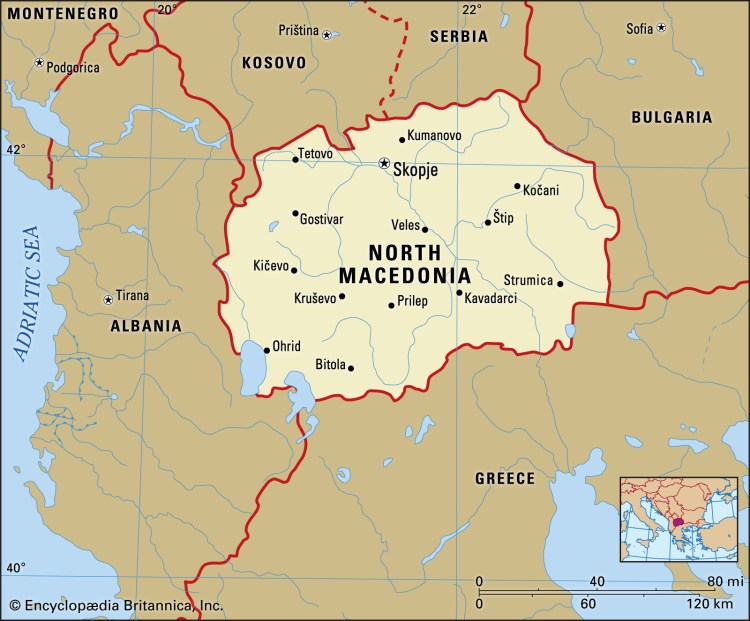
The lack of technological advances and prior foreign occupations has led to Macedonians people to be defensive in nature. The surrounding countries have often caused tension and threatened the security of the nation. Frequently, “given that Bulgaria and Greece had historical differences with the Macedonian republic, there was a danger that the crisis might provoke a broader regional confrontation,”(Frckoski 53). The persistent danger of confrontation has caused Macedonian to pass self-protective policies. The symbol that would be placed on the shield would be a thick old castle wall keeping out the surrounding countries. These walls not only keep outsiders out but also keeps out new technologies, beneficial relationships, and economic growth.
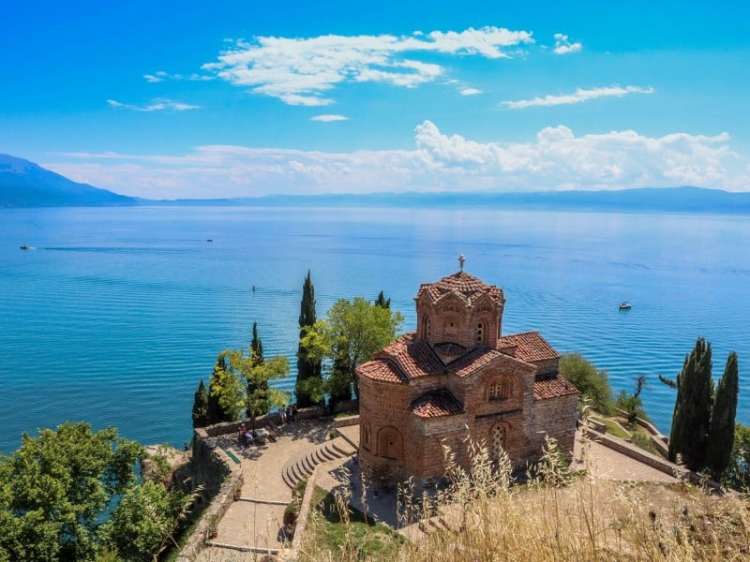
Another factor that adds to the walls that keep outsiders from being accepted into their culture is the deep extent of religious traditions and customs embedded in their society. Engraved on the shield would be a cross along with an icon of John the Baptist. Religious traditions influence the government and it is seen that “the Macedonian Orthodox Church is very important for the general political culture of the Orthodox population,”(Frckoski 2). Beyond political influence the church also has significant social influence on the people. Many non-working days are declared to honor various saints. These holidays affect the schedules of the entire country.

All cultures have priorities and ideals that set them apart from other cultures. These ideals influence actions and policies taken which in turn shapes the relationships between other cultures. The Roman ideals and priorities led to expanding their influence by conquering and interacting with many distinct cultures. Opposite to the Roman ideals, Macedonians are defensive against outsiders and expanding their influence. Resulting in a small and insular country and culture. Cultures have immense influence on people and assist people in forming their identities.

Work Cited
Fowler, Don P., and Peta G. Fowler. “Virgil.” The Oxford Classical Dictionary. : Oxford University Press, , 2005. Oxford Reference. Date Accessed 31 Mar. 2020 <https://www-oxfordreference-com.erl.lib.byu.edu/view/10.1093/acref/9780198606413.001.0001/acref-9780198606413-e-6829>.
Frckoski, Ljubomir, et al. MACEDONIA AND THE REGION. Edited by Dimitrios Triantaphyllou, European Union Institute for Security Studies (EUISS), 2001, pp. 37–46, THE SOUTHERN BALKANS: PERSPECTIVES FROM THE REGION, http://www.jstor.org/stable/resrep07038.7. Accessed 31 Mar. 2020.
Harrison, Stephen J. “Aeneas.” The Oxford Classical Dictionary. : Oxford University Press, , 2005. Oxford Reference. Date Accessed 31 Mar. 2020 <https://www-oxfordreference-com.erl.lib.byu.edu/view/10.1093/acref/9780198606413.001.0001/acref-9780198606413-e-130>.
“Macedonia.” Europe’s Role in Nation-Building: From the Balkans to the Congo, by James Dobbins et al., RAND Corporation, 2008, pp. 49–72. JSTOR, http://www.jstor.org/stable/10.7249/mg722rc.12. Accessed 31 Mar. 2020.
Matthews, John F. “Rome (history).” The Oxford Classical Dictionary. : Oxford University Press, , 2005. Oxford Reference. Date Accessed 9 Apr. 2020 <https://www-oxfordreference-com.erl.lib.byu.edu/view/10.1093/acref/9780198606413.001.0001/acref-9780198606413-e-5608>.
Purcell, Nicholas. “Augustus.” The Oxford Classical Dictionary. : Oxford University Press, , 2005. Oxford Reference. Date Accessed 31 Mar. 2020 <https://www-oxfordreference-com.erl.lib.byu.edu/view/10.1093/acref/9780198606413.001.0001/acref-9780198606413-e-979>.
Virgil, and Stanley Lombardo. The Essential Aeneid. Hackett Pub. Co., 2006.

