Featured

Kings, Democracy, and Power

Question 1: Compare and Contrast

Finding happiness, peace and success is an individual task. However, when it comes to the state of our society, as a whole, the responsibility mentally shifts to our leaders. Are their policies protecting us? Are their actions ensuring our success? Naturally, people look towards leaders as examples to society. A leader is expected to be “a speaker of words and doer of deeds,” (Homer 9.455). This motto is essential as strong leadership and reliable government give individuals a sense of security and trust in the government which builds confidence and pride in the people. Interwoven with these principles, actions of leaders reflect the culture and attitude of the people. Societies and governments throughout the ages have struggled with the balance and regulation of society. Both in Greece and the Americas kings in ancient times bore many responsibilities that were not always fulfilled by a qualified individual. The cycle of kingship came to an end by the increasing division of responsibility among all in hope of a more stable and flourishing society.
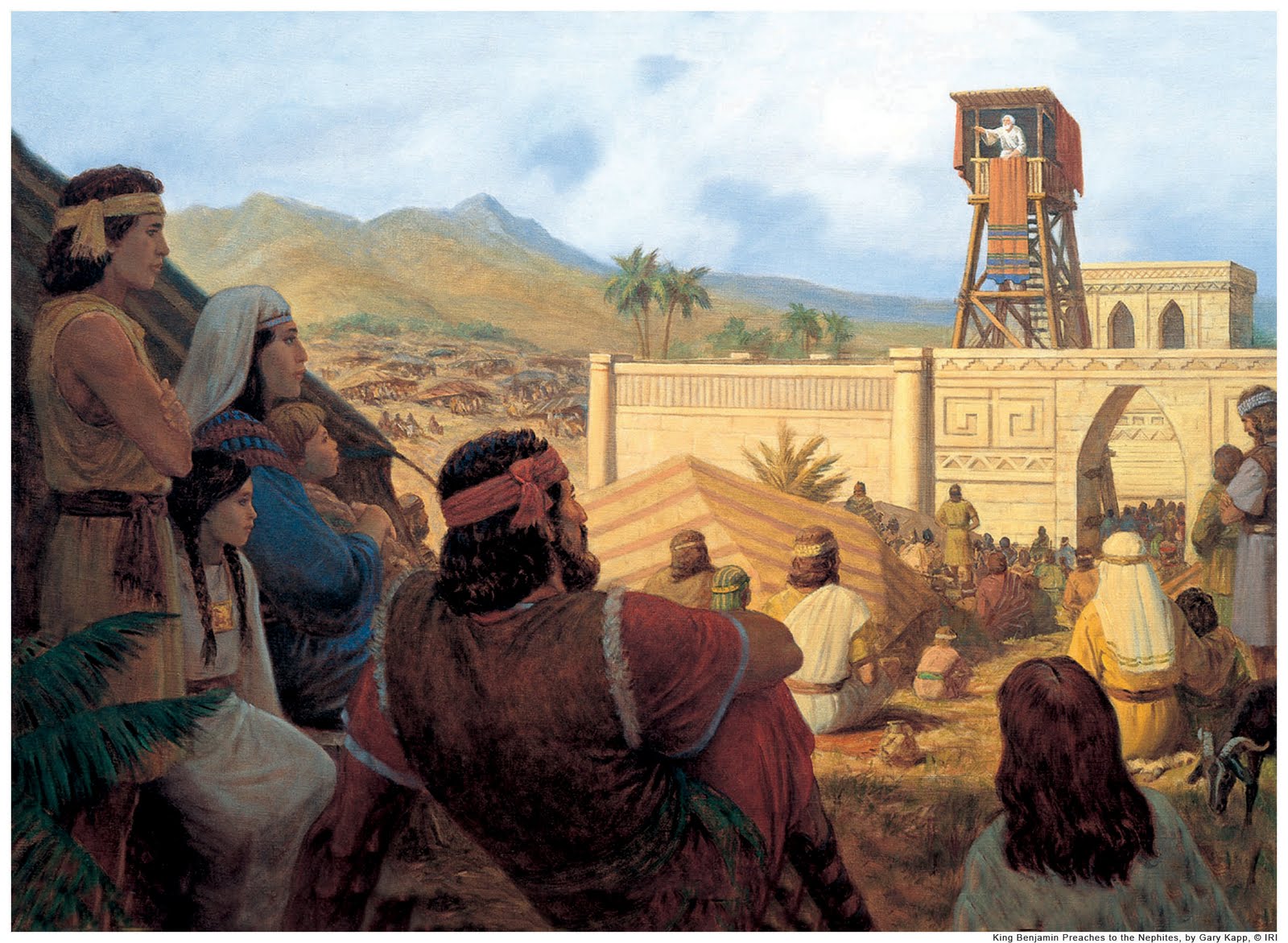
King Benjamin was actively involved in the society of his people.

Kings needed to be involved in social, political, religious and economic issues in order to build confidence in their reign. When a king is involved in these areas they demonstrate that they are responsible. Being responsible, in addition to being involved, builds public trust and support. Some of these responsibilities include the protection of the people, enforcement and creation of laws, and public safety and health. In the case of King Oedipus, these responsibilities are laid at his feet.. Oedipus demonstrated his responsibility to his people through his reaction to the plague. The health of his people was a concern for Oedipus. When contemplating the plague, he took it upon himself to discover the solution asking “what should I do to save this city” (Oedipus Rex line 77). Obviously, Oedipus felt responsible not only for the law and government but for the health of his people. The responsibilities of a king extended to all edges of society and parts of his subjects’ life. Thus, leading the king to become an example in all attributes. 

Though not mentioned in the paper, Mufasa was a king that demonstrated wonderful attributes.

When a king is active in the affairs of his people certain traits and attributes make him more popular in the eyes of his subjects. These virtues included “love of his subjects…beneficence…justice, self-control, wisdom, foresight, courage.” (Murray). Owing to this kind of behavior, a king or tyrant could gain the love and trust of the people. King Mosiah’s people illustrate this as “they did wax strong in love towards Mosiah; yea, they did esteem him more than any other man;”(The Book of Mormon, Mosiah 29.40). Gaining the trust of the people through actions and words is essential for all leaders. If the king was not a person you respect, why would you support them? For example, in Oedipus Rex, a plague arises distressing the city. Oedipus, with his kingly attribute, informs his people: “I have been weeping much and wandering many roads of the mind” in an attempt to think of a solution to their crisis (line 71). Oedipus sought to fill the role of a benevolent ruler. To a king, support from his people is not optional, it is essential.    

Hereditary reign can lead to jealously and problems.

Having a just king to gracefully shoulder the responsibilities and attributes listed was the ideal outcome of a monarchy. However, the maturity and abilities required to be a just king were not always fulfilled by those who were appointed to these positions, especially by the hereditary succession. Bad ruling leads to uprising and political turmoil. Tyranny is born from instability and discontent among the people. When all decisions rely on one sole leader their decisions have an immense impact on the people they lead. This impact is evident when Mosiah speaks of King Noah exclaiming: “how much iniquity doth one wicked king cause to be committed,” (Mosiah 29.17). Poor decisions by one have a great impact on many. In another case, Agamemnon rashly threatens Achilles causing internal contention among the Greeks. He claims that Achilles will see “how much stronger” he is in comparison which leads Achilles to refuse to fight for the Greeks (Homer 1.195). Undeniably, Agamemnon’s actions had a drastic effect on many lives after they lost the aid of Achilles for a period. Anger and pride lead leaders to make rash decisions that impact many innocent people.
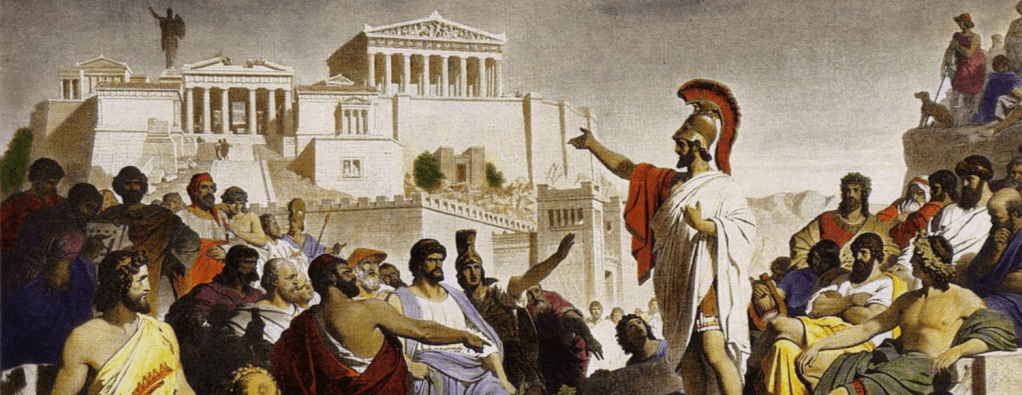
There are still leaders in democracies

Few can bear, with grace, the heavy burdens of responsibility of being a king.  As these burdens increased the appeal of a democracy likewise increased and therefore shifted the responsibility of leadership to a wider group of people. Democracy took some of the “the trials and troubles of a righteous king,” away and ensured the will of the people was honored (Mosiah 2.33). Consequently, subjects of democratic societies experienced a system that “favours the many instead of a few” (Finley 267). The responsibility was also spread among the many rather than only a few. In brief, the enormous amount of responsibility placed upon kings led to problems when unqualified men were in the position. These problems led to members of society taking on more responsibility for society by participating in a democratic government. 

Question 2: Why Strong Leaders?

Throughout time people have desired to have a single leader to look towards. The idea of democracy is appealing but comes with hindrances that can be avoided by having a kingship. Democracy eliminates most of the risk of having an unjust rule or decision made that wasn’t supported by the majority. However, the process is less efficient and can lead to division and internal conflict. The differences between the two ways of ruling led Cleon to state “a democracy is incapable of empire” (Finely 281). Regulation and unity are appealing characteristics to society due to the feeling of stability. 

See the source image
Like this baby, we look for an example to follow. For someone to make decisions and to show us how things should be done.

The search for regulation and unity is evident in the need for law. Law is an essential building block of government and provides structure and consequence. Law enforcement is a responsibility bestowed upon leaders. Oedipus affirms this role while arguing with Creon stating: “Yet, there must be rule.” (Oedipus Rex line 649). Evidently, regulating and enforcing were responsibilities given to the ruler. Similarly, King Mosiah explained, “I punished according to the crime which he has committed, according to the law,” (Mosiah 29.15). Uniformity in law enforcement and regulation gives society a sense of dependability and security. Undeniably the citizens feel safer in a predictable environment and live with less care knowing this responsibility is not on their shoulders alone. Without enforcement of the law, how would society flourish? For example, if there were no copyright or patent laws people would have no incentive to create new products or to innovate technology. Thus, the critical role of law enforcement cannot be overrated. As written in Thucydides, Cleon argued that the “present change of mind” (Finely 281) because of the democratic system would reflect upon the strength of their leadership. To be sure, Cleon recognized the importance of consistency in rule and the effect it can have on the perceived strength of the state.

In addition to regulating the law, strong leadership helps unify society. As seen in society today, multiple leaders and groups can fragment society. A strong leader unifies their people and prevents instability due to internal conflict. In the Iliad, Agamemnon and Achilles caused a division among the Greeks while they were fighting with Troy. After refusing to assist a final plea is directed toward Achilles stating: “the ships will be harder to save when they’re burning” (Homer 9.18). Fewer people would have suffered if Achilles had been united from the beginning. As we see from this example a unified society is more powerful and is more capable of protecting citizens. It typically takes longer for multiple people to make a decision than one authoritative person. More people results in more opinions and views. To conclude, establishing a consistent implementation of laws and having a society unified, as a whole, are two appeals of having a strong leader. 

Washington had immense influence on society even though he was not a King.

Unity and regulation, however, can still be found in a democracy. It is important for a democracy to have a strong leader as well. At some point a final decision needs to be made. In the system that King Mosiah created there was a chief judge. A chief judge was someone that would make the final decision concerning a case. The judge also served as a figurehead. Though not their king, they still looked toward him as their example. It is easier to look towards one person than a group. A single person is often used to signify the ideals of a group. Because of this leader’s status they have power to influence what the people support. Thus even an elected leader has power above their office.    

Conclusion

Leaders in all kinds of government, including monarchies and democracies have power and influence over the culture and views of the people. This influence comes partially due to the responsibilities placed upon them and the attributes they develop. In addition, poor leadership can have profound negative consequences on the people. Even in attempts to spread out the influence among the people through means of democracy, strong leaders naturally arose as the people sought a figurehead. This desire helped bring unity, regulation, and stability to their society. The motivation for these traits are found in both democracies and kingships in both classic Greek and Book of Mormon times. 

Works Cited

Finley, Moses I. The Portable Greek Historians. Penguin Books, 1977.

Homer, et al. The Essential Homer: Selections from the Iliad and the Odyssey. Hackett, 2000.

Sophocles, J E. Thomas, Paul Moliken, and Elizabeth Osborne. Oedipus Rex. , 2005. Print.

Murray, Oswyn. “kingship.” The Oxford Classical Dictionary. : Oxford University Press, , 2005.     Oxford Reference. Date Accessed 18 Feb. 2020 <https://www.oxfordreference.com/view/10.1093/acref/9780198606413.001.0001/acref-9780198606413-e-3529>.

The Book of Mormon: Another Testament of Jesus Christ. Salt Lake City, Utah: The Church of Jesus Christ Of Latter-day Saints, 2013. Print.
Symbols and Culture

The world contains diverse cultures defined by different traditions, histories, and unique elements that separate them from each other. These distinct cultural elements unified the people and set expectations for certain behaviors. In order to set expectations priorities are crucial. Some cultures prioritize individualism and other collectivism and these ideals influence their actions in drastic ways. The ideals and priorities of cultures often originate from the history of that culture. Certain events and people showcase the most important cultural values and  become symbols of the ideals of the people. In order to illustrate these influences, symbols are used repeatedly and can help us better understand these unique cultures. 

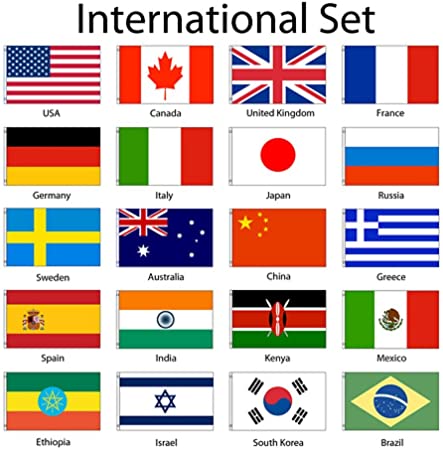
Flags are used to represent different countries. Flags become symbols of the countries.

           In the Aeneid, Aeneas is given a shield that is engraved with symbols of the Roman culture. The shield illustrates the founding events of Rome, including Romulus and Remus, and the rape of the Sabine women. Additionally, the shield shows the key battle of Actium emphasizing Caesar Augustus and the opposing side of Antony and Cleopatra. Symbols on the shield demonstrate themes of war, unity, and legacy which illustrate important aspects and priorities of Roman culture. The battles and violence shown on the shield show the importance of war and conquering to the Romans. The leaders engraved on the shield were symbols and examples of the moral and cultural values that were most important to their society. In addition, the images of battles and leaders also show the importance of unity and pride in Rome. 

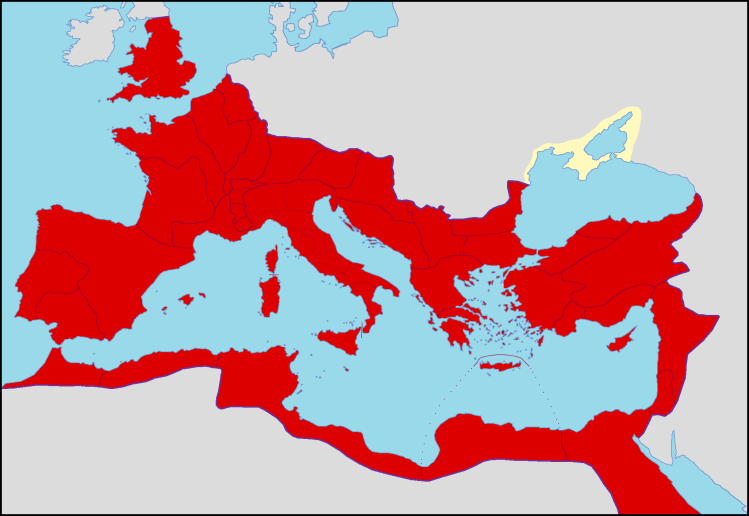
Map of the extent of the Roman empire.

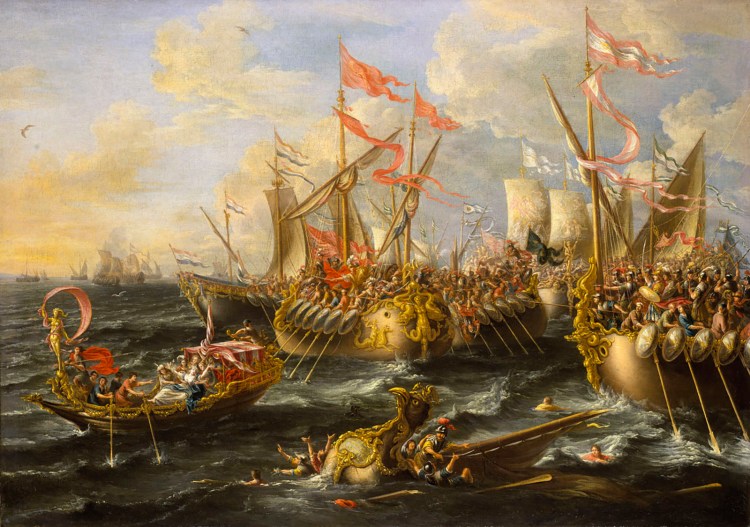
           Battles, the resulting victories, and war were important to the Roman legacy. The shield portrays several wars and battles such as “the sudden war between the sons of Romulus and aged Tatius” and “in the center…the Battle of Actium”(Virgil, Book 8 lines 728, 771). The victories that resulted from these battles helped shape Rome. These battles led to the conquering of other people and protecting and expanding their every growing influence. War was an expectation and expanding their empire through war helped the empire flourish. After the battles, Rome would absorb the conquered people into their empire. Rome did not keep enemies but rather “Rome completed the conquest of peninsular Italy by forcing all its peoples to become allies, either by defeating them in war or compelling them to surrender in advance,”(Matthews 1). War helped their empire flourish and was essential to the success of the citizens of Rome. The people were expected to put the pride and success of their country above their own lives and families. 

painting of the battle of Actium

           The pride of Rome helped unify the empire and helped fuel the empire’s success. Unity was essential and the empire expanded to envelope multiple cultures and peoples. As citizens prioritized Rome over everything else, the empire flourished. On the shield, the conquered people are also shown, and Virgil describes them, “each as different in their clothes and gear as in the tongues they spoke,” (Book 8, line 830). The diversity described on the shield shows how Rome included and adopted many peoples into their empire. Instead of a division among people, they promoted inclusion and gave the conquered people reasons to want to be part of the Roman empire.

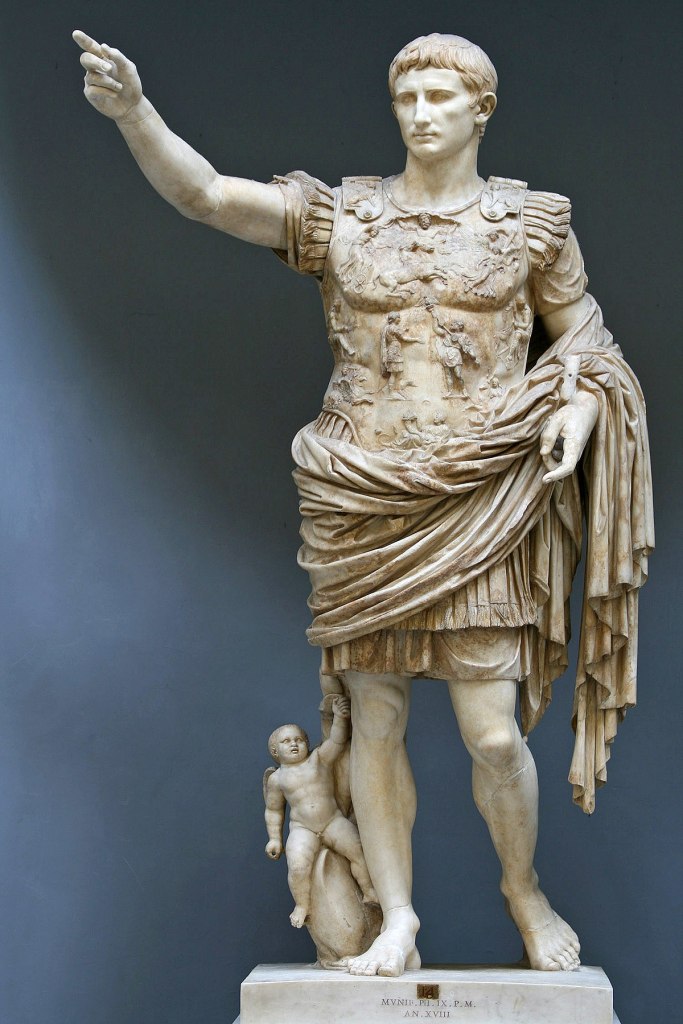
Augustus of Prima Porta

           Leaders were vital in unifying Rome and served as  examples of the values to be fostered by society. The leaders portrayed on the shield also demonstrate the ideal Roman values and morals. Some of the leaders pictured on the shield included Romulus and Remus and Caesar Augustus. These leaders were strong military leaders that proceeded to influence society. Caesar Augustus had a particularly strong influence “His concern for the institutions of state allowed him to insert himself into the annals of Roman history as a continuator or reformer rather than as an intruder or revolutionary,”(Purcell 1).

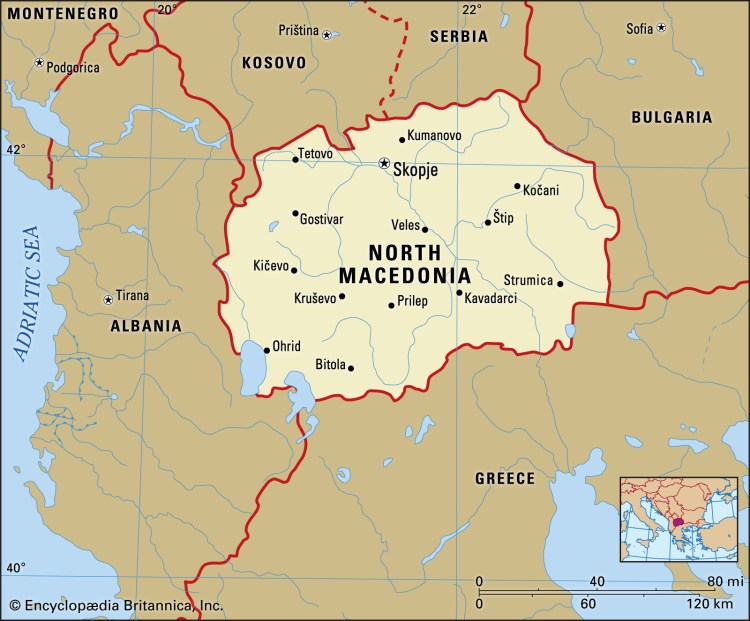
           If someone were to engrave a shield that represented Macedonian culture, there are a few key images that would symbolize their cultural values. Engraven on the shield would be  a wood-burning stove and an intricate cross.Surrounding all of these things would be a thick wall keeping the surrounding countries of Albania, Bulgaria, Kosovo, and Greece out of the inner part of the shield. Macedonia has very old and deep-rooted traditions. Its people are slow to change. They are defensive against outsiders, and the traditions of the Orthodox church influence the government and the daily life of its citizens.

A wood-burning stove

            Traditions and old fashion processes are held in high regard in Macedonian society. Engraved on a shield, symbolizing Macedonia, would be an old fashion wood burning stove. Macedonians pride themselves on their traditional ways and processes. A woodburning stove is used to produce the traditional pepper spread that requires a three-day cooking process to complete. Historical events have led to this reliance on traditional ways. Over time, “Macedonia had experienced a decade of domestic and regional crises that had retarded political and economic progress,” which resulted in the prevention of the the availability and affordability of technological advances (Dobbins 53). 

A map of Macedonia and the surrounding countries

           The lack of technological advances and prior foreign occupations has led to Macedonians people to be defensive in nature. The surrounding countries have often caused tension and threatened the security of the nation. Frequently, “given that Bulgaria and Greece had historical differences with the Macedonian republic, there was a danger that the crisis might provoke a broader regional confrontation,”(Frckoski 53). The persistent danger of confrontation has caused Macedonian to pass self-protective policies. The symbol that would be placed on the shield would be a thick old castle wall keeping out the surrounding countries. These walls not only keep outsiders out but also keeps out new technologies, beneficial relationships, and economic growth. 

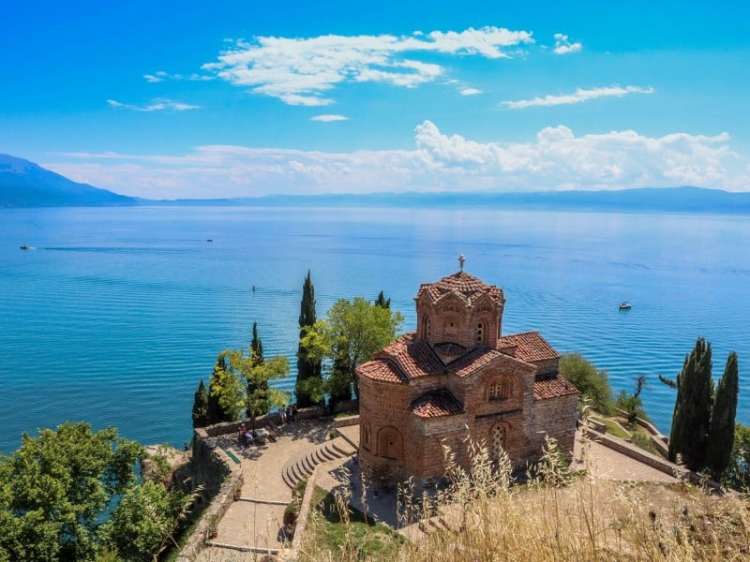
A traditional Orthodox church in Ohrid, Macedonia

            Another factor that adds to the walls that keep outsiders from being accepted into their culture is the deep extent of religious traditions and customs embedded in their society. Engraved on the shield would be a cross along with an icon of John the Baptist. Religious traditions  influence the government and it is seen that “the Macedonian Orthodox Church is very important for the general political culture of the Orthodox population,”(Frckoski 2). Beyond political influence the church also has significant social influence on the people. Many non-working days are declared to honor  various saints. These holidays affect the schedules of the entire country. 

The Millennium Cross located at the top of Mt. Vodno in Skopje Macedonia

           All cultures have priorities and ideals that set them apart from other cultures. These ideals influence actions and policies taken which in turn shapes the relationships between other cultures. The Roman ideals and priorities led to expanding their influence by conquering and interacting with many distinct cultures. Opposite to the Roman ideals, Macedonians are defensive against outsiders and expanding their influence. Resulting in a small and insular country and culture. Cultures have immense influence on people and assist people in forming their identities.

Macedonians have a unique culture and and they are amazing individuals.

Work Cited

Fowler, Don P., and Peta G. Fowler. “Virgil.” The Oxford Classical Dictionary. : Oxford University Press, , 2005. Oxford Reference. Date Accessed 31 Mar. 2020 <https://www-oxfordreference-com.erl.lib.byu.edu/view/10.1093/acref/9780198606413.001.0001/acref-9780198606413-e-6829&gt;.

Frckoski, Ljubomir, et al. MACEDONIA AND THE REGION. Edited by Dimitrios Triantaphyllou, European Union Institute for Security Studies (EUISS), 2001, pp. 37–46, THE SOUTHERN BALKANS: PERSPECTIVES FROM THE REGION, http://www.jstor.org/stable/resrep07038.7. Accessed 31 Mar. 2020.

Harrison, Stephen J. “Aeneas.” The Oxford Classical Dictionary. : Oxford University Press, , 2005. Oxford Reference. Date Accessed 31 Mar. 2020 <https://www-oxfordreference-com.erl.lib.byu.edu/view/10.1093/acref/9780198606413.001.0001/acref-9780198606413-e-130&gt;.

“Macedonia.” Europe’s Role in Nation-Building: From the Balkans to the Congo, by James Dobbins et al., RAND Corporation, 2008, pp. 49–72. JSTOR, http://www.jstor.org/stable/10.7249/mg722rc.12. Accessed 31 Mar. 2020.

Matthews, John F. “Rome (history).” The Oxford Classical Dictionary. : Oxford University Press, , 2005. Oxford Reference. Date Accessed 9 Apr. 2020 <https://www-oxfordreference-com.erl.lib.byu.edu/view/10.1093/acref/9780198606413.001.0001/acref-9780198606413-e-5608&gt;.

Purcell, Nicholas. “Augustus.” The Oxford Classical Dictionary. : Oxford University Press, , 2005. Oxford Reference. Date Accessed 31 Mar. 2020 <https://www-oxfordreference-com.erl.lib.byu.edu/view/10.1093/acref/9780198606413.001.0001/acref-9780198606413-e-979&gt;.

Virgil, and Stanley Lombardo. The Essential Aeneid. Hackett Pub. Co., 2006.

Kings, Democracy, and Power

Question 1: Compare and Contrast

Finding happiness, peace and success is an individual task. However, when it comes to the state of our society, as a whole, the responsibility mentally shifts to our leaders. Are their policies protecting us? Are their actions ensuring our success? Naturally, people look towards leaders as examples to society. A leader is expected to be “a speaker of words and doer of deeds,” (Homer 9.455). This motto is essential as strong leadership and reliable government give individuals a sense of security and trust in the government which builds confidence and pride in the people. Interwoven with these principles, actions of leaders reflect the culture and attitude of the people. Societies and governments throughout the ages have struggled with the balance and regulation of society. Both in Greece and the Americas kings in ancient times bore many responsibilities that were not always fulfilled by a qualified individual. The cycle of kingship came to an end by the increasing division of responsibility among all in hope of a more stable and flourishing society.

King Benjamin was actively involved in the society of his people.

Kings needed to be involved in social, political, religious and economic issues in order to build confidence in their reign. When a king is involved in these areas they demonstrate that they are responsible. Being responsible, in addition to being involved, builds public trust and support. Some of these responsibilities include the protection of the people, enforcement and creation of laws, and public safety and health. In the case of King Oedipus, these responsibilities are laid at his feet.. Oedipus demonstrated his responsibility to his people through his reaction to the plague. The health of his people was a concern for Oedipus. When contemplating the plague, he took it upon himself to discover the solution asking “what should I do to save this city” (Oedipus Rex line 77). Obviously, Oedipus felt responsible not only for the law and government but for the health of his people. The responsibilities of a king extended to all edges of society and parts of his subjects’ life. Thus, leading the king to become an example in all attributes. 

Though not mentioned in the paper, Mufasa was a king that demonstrated wonderful attributes.

When a king is active in the affairs of his people certain traits and attributes make him more popular in the eyes of his subjects. These virtues included “love of his subjects…beneficence…justice, self-control, wisdom, foresight, courage.” (Murray). Owing to this kind of behavior, a king or tyrant could gain the love and trust of the people. King Mosiah’s people illustrate this as “they did wax strong in love towards Mosiah; yea, they did esteem him more than any other man;”(The Book of Mormon, Mosiah 29.40). Gaining the trust of the people through actions and words is essential for all leaders. If the king was not a person you respect, why would you support them? For example, in Oedipus Rex, a plague arises distressing the city. Oedipus, with his kingly attribute, informs his people: “I have been weeping much and wandering many roads of the mind” in an attempt to think of a solution to their crisis (line 71). Oedipus sought to fill the role of a benevolent ruler. To a king, support from his people is not optional, it is essential.    

Hereditary reign can lead to jealously and problems.

Having a just king to gracefully shoulder the responsibilities and attributes listed was the ideal outcome of a monarchy. However, the maturity and abilities required to be a just king were not always fulfilled by those who were appointed to these positions, especially by the hereditary succession. Bad ruling leads to uprising and political turmoil. Tyranny is born from instability and discontent among the people. When all decisions rely on one sole leader their decisions have an immense impact on the people they lead. This impact is evident when Mosiah speaks of King Noah exclaiming: “how much iniquity doth one wicked king cause to be committed,” (Mosiah 29.17). Poor decisions by one have a great impact on many. In another case, Agamemnon rashly threatens Achilles causing internal contention among the Greeks. He claims that Achilles will see “how much stronger” he is in comparison which leads Achilles to refuse to fight for the Greeks (Homer 1.195). Undeniably, Agamemnon’s actions had a drastic effect on many lives after they lost the aid of Achilles for a period. Anger and pride lead leaders to make rash decisions that impact many innocent people.

There are still leaders in democracies

Few can bear, with grace, the heavy burdens of responsibility of being a king.  As these burdens increased the appeal of a democracy likewise increased and therefore shifted the responsibility of leadership to a wider group of people. Democracy took some of the “the trials and troubles of a righteous king,” away and ensured the will of the people was honored (Mosiah 2.33). Consequently, subjects of democratic societies experienced a system that “favours the many instead of a few” (Finley 267). The responsibility was also spread among the many rather than only a few. In brief, the enormous amount of responsibility placed upon kings led to problems when unqualified men were in the position. These problems led to members of society taking on more responsibility for society by participating in a democratic government. 

Question 2: Why Strong Leaders?

Throughout time people have desired to have a single leader to look towards. The idea of democracy is appealing but comes with hindrances that can be avoided by having a kingship. Democracy eliminates most of the risk of having an unjust rule or decision made that wasn’t supported by the majority. However, the process is less efficient and can lead to division and internal conflict. The differences between the two ways of ruling led Cleon to state “a democracy is incapable of empire” (Finely 281). Regulation and unity are appealing characteristics to society due to the feeling of stability. 

See the source image
Like this baby, we look for an example to follow. For someone to make decisions and to show us how things should be done.

The search for regulation and unity is evident in the need for law. Law is an essential building block of government and provides structure and consequence. Law enforcement is a responsibility bestowed upon leaders. Oedipus affirms this role while arguing with Creon stating: “Yet, there must be rule.” (Oedipus Rex line 649). Evidently, regulating and enforcing were responsibilities given to the ruler. Similarly, King Mosiah explained, “I punished according to the crime which he has committed, according to the law,” (Mosiah 29.15). Uniformity in law enforcement and regulation gives society a sense of dependability and security. Undeniably the citizens feel safer in a predictable environment and live with less care knowing this responsibility is not on their shoulders alone. Without enforcement of the law, how would society flourish? For example, if there were no copyright or patent laws people would have no incentive to create new products or to innovate technology. Thus, the critical role of law enforcement cannot be overrated. As written in Thucydides, Cleon argued that the “present change of mind” (Finely 281) because of the democratic system would reflect upon the strength of their leadership. To be sure, Cleon recognized the importance of consistency in rule and the effect it can have on the perceived strength of the state.

In addition to regulating the law, strong leadership helps unify society. As seen in society today, multiple leaders and groups can fragment society. A strong leader unifies their people and prevents instability due to internal conflict. In the Iliad, Agamemnon and Achilles caused a division among the Greeks while they were fighting with Troy. After refusing to assist a final plea is directed toward Achilles stating: “the ships will be harder to save when they’re burning” (Homer 9.18). Fewer people would have suffered if Achilles had been united from the beginning. As we see from this example a unified society is more powerful and is more capable of protecting citizens. It typically takes longer for multiple people to make a decision than one authoritative person. More people results in more opinions and views. To conclude, establishing a consistent implementation of laws and having a society unified, as a whole, are two appeals of having a strong leader. 

Washington had immense influence on society even though he was not a King.

Unity and regulation, however, can still be found in a democracy. It is important for a democracy to have a strong leader as well. At some point a final decision needs to be made. In the system that King Mosiah created there was a chief judge. A chief judge was someone that would make the final decision concerning a case. The judge also served as a figurehead. Though not their king, they still looked toward him as their example. It is easier to look towards one person than a group. A single person is often used to signify the ideals of a group. Because of this leader’s status they have power to influence what the people support. Thus even an elected leader has power above their office.    

Conclusion

Leaders in all kinds of government, including monarchies and democracies have power and influence over the culture and views of the people. This influence comes partially due to the responsibilities placed upon them and the attributes they develop. In addition, poor leadership can have profound negative consequences on the people. Even in attempts to spread out the influence among the people through means of democracy, strong leaders naturally arose as the people sought a figurehead. This desire helped bring unity, regulation, and stability to their society. The motivation for these traits are found in both democracies and kingships in both classic Greek and Book of Mormon times. 

Works Cited

Finley, Moses I. The Portable Greek Historians. Penguin Books, 1977.

Homer, et al. The Essential Homer: Selections from the Iliad and the Odyssey. Hackett, 2000.

Sophocles, J E. Thomas, Paul Moliken, and Elizabeth Osborne. Oedipus Rex. , 2005. Print.

Murray, Oswyn. “kingship.” The Oxford Classical Dictionary. : Oxford University Press, , 2005.     Oxford Reference. Date Accessed 18 Feb. 2020 <https://www.oxfordreference.com/view/10.1093/acref/9780198606413.001.0001/acref-9780198606413-e-3529>.

The Book of Mormon: Another Testament of Jesus Christ. Salt Lake City, Utah: The Church of Jesus Christ Of Latter-day Saints, 2013. Print.
Introduce Yourself (Example Post)

This is an example post, originally published as part of Blogging University. Enroll in one of our ten programs, and start your blog right.

You’re going to publish a post today. Don’t worry about how your blog looks. Don’t worry if you haven’t given it a name yet, or you’re feeling overwhelmed. Just click the “New Post” button, and tell us why you’re here.

Why do this?

  • Because it gives new readers context. What are you about? Why should they read your blog?
  • Because it will help you focus you own ideas about your blog and what you’d like to do with it.

The post can be short or long, a personal intro to your life or a bloggy mission statement, a manifesto for the future or a simple outline of your the types of things you hope to publish.

To help you get started, here are a few questions:

  • Why are you blogging publicly, rather than keeping a personal journal?
  • What topics do you think you’ll write about?
  • Who would you love to connect with via your blog?
  • If you blog successfully throughout the next year, what would you hope to have accomplished?

You’re not locked into any of this; one of the wonderful things about blogs is how they constantly evolve as we learn, grow, and interact with one another — but it’s good to know where and why you started, and articulating your goals may just give you a few other post ideas.

Can’t think how to get started? Just write the first thing that pops into your head. Anne Lamott, author of a book on writing we love, says that you need to give yourself permission to write a “crappy first draft”. Anne makes a great point — just start writing, and worry about editing it later.

When you’re ready to publish, give your post three to five tags that describe your blog’s focus — writing, photography, fiction, parenting, food, cars, movies, sports, whatever. These tags will help others who care about your topics find you in the Reader. Make sure one of the tags is “zerotohero,” so other new bloggers can find you, too.

Design a site like this with WordPress.com
Get started